Automating X.509 authentication with AI enhances security and efficiency in the authentication process. It streamlines identity verification by reducing human error and providing real-time monitoring. AI can automate certificate issuance, allowing for proactive management and compliance. However, challenges such as data quality and integration complexity may arise. Best practices can guarantee a seamless shift. This approach not only optimizes security measures but also paves the way for advancements in certificate management and proactive risk mitigation.

Key Takeaways
- AI can automate the issuance of X.509 certificates, minimizing human errors in authentication processes. Predictive analytics powered by AI can identify potential vulnerabilities in X.509 authentication systems. Real-time monitoring facilitated by AI enhances compliance and reduces the risk of certificate expiration. Machine learning algorithms can improve the accuracy of identity verification in X.509 authentication. AI streamlines certificate management, ensuring timely renewals and adherence to security protocols.
Understanding X.509 Authentication
X.509 authentication serves as a cornerstone for secure communications in modern networks. This standard defines the format for public key certificates, which are vital for establishing trust between communicating parties.
Each certificate contains a public key and the identity of the owner, validated by a trusted certificate authority (CA). The authentication process guarantees that entities can verify each other's identities before exchanging sensitive information.
Each X.509 certificate links a public key to an owner's identity, ensuring secure identity verification for safe information exchange.
X.509 certificates facilitate secure connections through protocols like SSL/TLS, safeguarding data from potential interception. The widespread adoption of X.509 enhances interoperability across diverse systems and platforms, making it integral to online security.
Understanding X.509 authentication is essential for organizations aiming to protect their digital assets and maintain user trust in an increasingly interconnected world.
The Role of AI in Cybersecurity
As organizations increasingly rely on X.509 authentication for secure communications, the role of artificial intelligence (AI) in cybersecurity becomes more pronounced.
AI technologies enhance the ability to detect and respond to security threats in real-time, analyzing vast amounts of data to identify anomalies that may indicate breaches. By leveraging machine learning algorithms, AI can continuously improve its threat detection capabilities, adapting to evolving cyber threats.
Additionally, AI can automate repetitive tasks, such as log analysis and incident response, allowing cybersecurity professionals to focus on more complex challenges.
The integration of AI in cybersecurity also supports predictive analytics, helping organizations anticipate potential vulnerabilities before they are exploited. This proactive approach strengthens overall security posture and fosters a more resilient digital environment.
Benefits of Automating X.509 Authentication
Automating X.509 authentication offers significant advantages in enhancing security measures and optimizing access management.
By employing automated systems, organizations can reduce the risk of human error and guarantee that authentication processes are consistently robust.
Additionally, streamlined access management can improve user experience while maintaining stringent security protocols.
Enhanced Security Measures
Implementing automation in X.509 authentication greatly enhances security measures across various applications.
By deploying AI-driven solutions, organizations can considerably reduce vulnerabilities and manage risks more effectively.
Key benefits include:
- Real-time monitoring: Automation provides continuous oversight, detecting anomalies swiftly.
- Reduced human error: Minimizing manual processes lowers the risk of mistakes, enhancing overall reliability.
- Enhanced encryption: Automated systems can enforce stronger encryption protocols consistently.
- Scalability: Automated solutions can easily adapt to increasing security demands without compromising integrity.
- Streamlined certificate management: Automation simplifies the lifecycle of certificates, ensuring timely renewals and compliance.
These improvements not only fortify defenses against potential threats but also promote a more resilient security posture in an increasingly complex digital landscape.
Streamlined Access Management
Streamlined access management considerably benefits from the automation of X.509 authentication, allowing organizations to efficiently control user access while maintaining security standards.
By implementing automated systems, organizations can reduce the time and resources spent on manual authentication processes. This leads to quicker onboarding and offboarding of users, ensuring that access rights are promptly updated in alignment with organizational changes.
In addition, automation minimizes the risk of human error, which can compromise security protocols. Enhanced visibility into user access patterns also facilitates better compliance with regulatory requirements.
Challenges in Implementing AI Solutions
Implementing AI solutions in X.509 authentication presents several challenges, including data quality issues that can impact model performance.
Additionally, the complexity of integrating AI with existing systems can create significant obstacles.
Regulatory compliance hurdles further complicate the adoption of AI, necessitating careful navigation of legal frameworks.
Data Quality Issues
Data quality serves as a critical foundation for successful AI implementations, particularly in the domain of X.509 authentication. Poor data quality can hinder the effectiveness of AI models, leading to inaccurate authentication decisions and security risks.
Several challenges arise due to data quality issues, including:
- Inconsistent data formats across sources
- Insufficient volume of labeled training data
- Presence of duplicate or outdated records
- Lack of standardization in certificate attributes
- High levels of noise in the dataset
These factors can complicate the training process and affect the model's ability to learn effectively.
Addressing these data quality issues is essential for ensuring that AI solutions can perform reliably and securely in automating X.509 authentication processes.
Integration Complexity
The challenges of maintaining high data quality are intertwined with the complexities of integrating AI solutions for X.509 authentication. Organizations often face difficulties in ensuring that AI algorithms are compatible with existing systems and protocols.
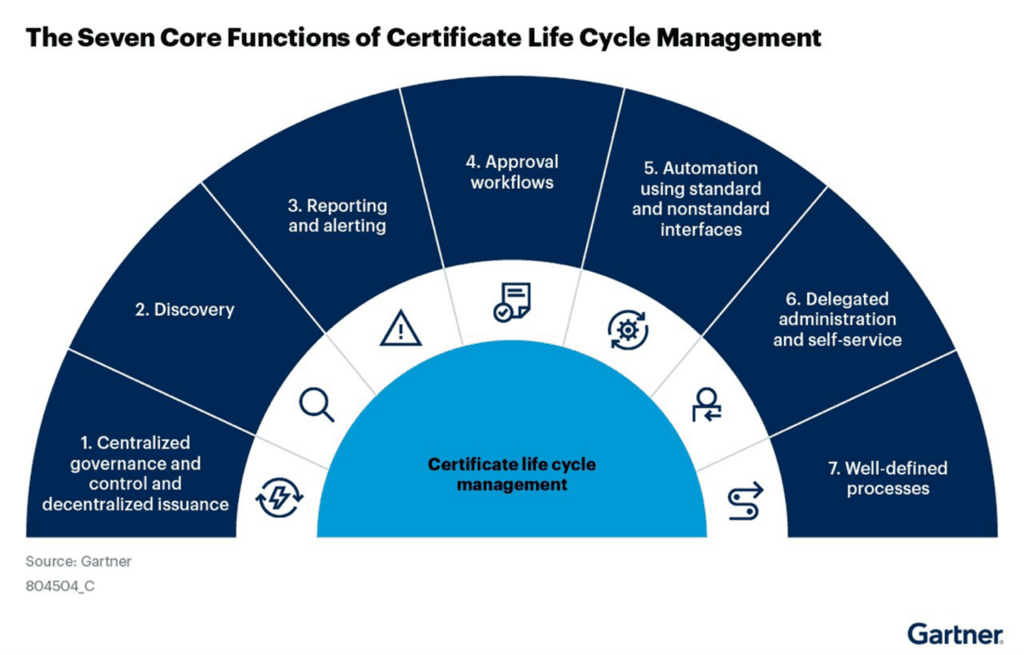
The need for consistent data formats and structures can also complicate integration efforts. Additionally, the integration process may require significant adjustments to legacy systems, which can be both time-consuming and costly.
Organizations must also navigate the diverse range of AI tools, each with unique requirements and capabilities. Moreover, aligning AI models with the specific authentication processes necessitates a thorough understanding of both AI technology and the nuances of X.509 certificates, creating additional barriers to successful implementation.
Regulatory Compliance Hurdles
While advancing AI solutions for X.509 authentication offers significant benefits, organizations often encounter regulatory compliance hurdles that can impede progress. These challenges arise from the need to align AI technologies with various legal and industry standards.
Compliance requirements can be intricate and vary across different jurisdictions, leading to potential obstacles in implementation.
Key compliance hurdles include:
- Data Privacy Regulations: Adhering to laws like GDPR that govern personal data usage.
- Security Standards: Meeting frameworks such as NIST or ISO for system security.
- Audit Requirements: Maintaining thorough documentation for regulatory reviews.
- Ethical AI Guidelines: Ensuring AI algorithms do not perpetuate bias.
- Interoperability Standards: Complying with cross-industry data sharing regulations.
Navigating these complexities is essential for successful AI integration.
Best Practices for Integration
Integrating X.509 authentication into existing systems requires careful planning to confirm seamless functionality and security. Organizations should begin with a thorough assessment of current infrastructure and workflows to identify integration points.
Integrating X.509 authentication demands meticulous planning and infrastructure assessment to ensure seamless functionality and robust security.
It's vital to ascertain compatibility between existing applications and the X.509 framework, minimizing disruptions. Additionally, implementing robust key management practices is essential to protect private keys from unauthorized access.
Testing the integration in a controlled environment allows for the identification of potential issues before full deployment. Regular audits and updates are recommended to maintain compliance with security standards and protocols.
Finally, training staff on X.509 best practices enhances operational readiness and mitigates risks associated with mismanagement or misuse of authentication credentials.
The Future of AI in Certificate Management
As organizations increasingly rely on digital certificates for secure communications, the integration of artificial intelligence (AI) into certificate management is poised https://aquipress.com/top-rated-pki-management-platform-unveiled/ to revolutionize the field.
AI technologies will enhance the efficiency and security of managing digital certificates through various innovative solutions.
Key advancements include:
- Automated certificate issuance: Streamlining the process to minimize human error.
- Predictive analytics: Anticipating potential security threats and vulnerabilities.
- Real-time monitoring: Ensuring compliance and reducing the risk of certificate expiration.
- Intelligent decision-making: Facilitating better resource allocation and risk management.
- Enhanced user experience: Simplifying the management process for IT teams.
The future of AI in certificate management promises to deliver a robust framework, enhancing both security and operational efficiency.
FAQ
What Is the History of X.509 Certificates?
The history of X.509 certificates dates back to 1988 when the International Telecommunication Union (ITU) published the standard as part of the X.500 directory services framework.
Initially designed to provide a method for securely exchanging public keys, X.509 has evolved greatly.
It has become a fundamental component of secure communications on the internet, underpinning protocols like SSL/TLS, and ensuring trust in digital identities across various applications and systems.
How Does AI Improve Certificate Lifecycle Management?
In the intricate dance of digital security, artificial intelligence emerges as a skilled partner, enhancing certificate lifecycle management.
By automating routine tasks, AI reduces human error and accelerates processes such as issuance, renewal, and revocation of certificates. Its predictive analytics can identify potential vulnerabilities before they become threats, ensuring a more robust security posture.
Consequently, AI not only streamlines operations but also fortifies the overall integrity of digital communications.
What Types of Organizations Benefit From Automating X.509 Authentication?
Various organizations can benefit from automating X.509 authentication, particularly those in sectors requiring stringent security measures, such as finance, healthcare, and government.
These entities often handle sensitive data and rely on secure communication channels, making efficient certificate management essential. Additionally, large enterprises with extensive digital infrastructures can streamline their operations and reduce the risk of human error through automation.
This leads to improved security, compliance, and overall operational efficiency in managing digital identities.
Can AI Detect Compromised X.509 Certificates?
The ability of AI to detect compromised X.509 certificates hinges on its capability to analyze patterns and anomalies within certificate data.
By employing machine learning algorithms, AI can identify irregularities that may indicate unauthorized access or fraudulent behavior.
Additionally, real-time monitoring enhances the detection of compromised certificates, allowing for timely responses.
Consequently, AI presents a promising solution for organizations seeking to strengthen their security measures against potential certificate vulnerabilities.
What Are Common Misconceptions About X.509 Authentication?
Many individuals believe that X.509 authentication guarantees absolute security, but this is a misconception. They often underestimate the importance of proper certificate management and the potential threat of outdated or misconfigured certificates.
Additionally, some assume that once a certificate is issued, it remains secure indefinitely.
In reality, vigilance is required; regular audits and updates are essential to maintaining trust in the authentication process.
These misunderstandings can lead to significant vulnerabilities in security systems.
Conclusion
To sum up, automating X.509 authentication with AI can streamline security processes much like a conductor harmonizes an orchestra, ensuring each component plays its part efficiently. While there are challenges to navigate, the benefits of enhanced security and operational efficiency present a compelling case for integration. As organizations continue to evolve, embracing AI in certificate management may not just be advantageous but essential, paving the way for a future where security systems are both robust and agile.